


 ptza@civil.auth.gr
Articles
ORIGEN - THE SOURCE OF AUGUSTINE'S THEORY OF TIME
Yearbook PHILOSOPHIA,
of the center for the Research of Greek Philosophy
at the Academy o Athens
1987-1988
THE AUTONOMY OF THE STOIC VIEW OF TIME
Yearbook PHILOSOPHIA,
of the center for the Research of Greek Philosophy
at the Academy o Athens
1989-1990
 Origen and the Stoic View of Time
Journal of the History of Ideas
 CREATION EX NIHILO IN ORIGEN
Aristotle University of Thessaloniki, 1994
Philosophy and Theology in Technological Society
TRINITY COLLEGE BULLETIN
Glasgow, 1997
THE CONCEPT OF MATTER (HYLE) IN PLATO'S TIMAEUS
Yearbook PHILOSOPHIA,
of the center for the Research of Greek Philosophy
at the Academy o Athens
1997-1998
The Aristotelian sense of Accidental Being and its
significance for Patristic thought
ARISTOTLE ON METAPHYSICS
Thessaloniki, 1999
The Book of Cassian copied by Posterity
Appendix I to my book
The Real Cassian Revisited
Greek References to Cassian
Appendix II to my book
The Real Cassian Revisited
Cassian and Caesarius reviewed by Photius
Appendix III to my book
The Real Cassian Revisited
Cassian and Caesarius identified
Appendix I to my book
A Newly Discovered Greek Father
Pseudo-Didymus’ De Trinitate is Cassian’s Work
Appendix II to my book
A Newly Discovered Greek Father
Cassian the Astronomer
An unpublished Greek text by Cassian the Sabaite
Appendix III to my book
A Newly Discovered Greek Father
Cassian who? On attempts to rescue a figment
Appendix II to my book
Origen and Hellenism
The Interplay Between Greek and Christian Ideas
in Late Antiquity
Articles in Greek are located in the Greek version of this site
THE CONCEPT OF TIME IN ORIGEN
PhD. Thesis – University of Glasgow, 1983–1987
Against all false accounts, both ancient and modern, this dissertation introduced for the first time the argument that Origen was an anti-Platonist in many respects and that he was the Greek illustrious philosopher and exegete of Plato, who turned a Christian anti-Platonist and ushered to the Creed of Nicaea. All allegations that Origen maintained doctrines such as ‘beginningless creation’, ‘pre-existence of souls’ [or of ‘intellects’], ‘transmigration of souls’, the Son being a ‘creature’, et cetera, have at last been demolished. Much later, a few scholars followed on my rebuttal of the notion of ‘pre-existence of souls’ allegedly maintained by Origen.
Besides, against all claims that Origen lacked an Eschatology and did not care for History, his Eschatology and Philosophy of History are expounded in detail.
 THE CONCEPT OF TIME IN ORIGEN
PETER LANG, 1991
New York, Bern • Berlin • Brussels • Vienna • Oxford • Warsaw
pp. xv + 606
This is publication of my PhD. Thesis – University of Glasgow, 1983–1987
(repr. 2026)
 ORIGEN: COSMOLOGY AND ONTOLOGY OF TIME
SUPPLEMENTS TO VIGILIAE CHRISTIANAE
vol. 77
BRILL, 2006
This book reiterates and elaborates on Chapters 1-4 of my 1983-1987 doctoral thesis
Visit the official website of this book
https://brill.com/display/title/12088
 ORIGEN: PHILOSOPHY OF HISTORY & ESCHATOLOGY
SUPPLEMENTS TO VIGILIAE CHRISTIANAE
vol. 85
BRILL, 2007
This book reiterates and elaborates on Chapter 5 of my 1983-1987 doctoral thesis. Two chapters have been added, retailing my Thesis. They comprise PART IV: Philosophy of History Resolved - A myth reconsidered: Chapter 10, pp. 357–380; "History Without a Body?". Chapter 11, pp. 381–434: "Is History a Parable?".
Several uninformed theologians (being in the dark, as they are on several other pertinent issues, too - let alone philosophy in general) reference the analyses of this book as if they first appeared in 2007. They usually claim that I followed Mark Edwards’ 2002-book, which I never cited therein, and could not have cited during those earlier years, when Edwards’ book had not yet been written. In reality, however, my exposition harks back to my 1983-1987 Thesis, and its 1991-publication. And yet, this nescience persists, in the teeth of Mark Edwards himself having set the record straight a million times on that score.
Visit the official website of this book
https://brill.com/display/title/12557
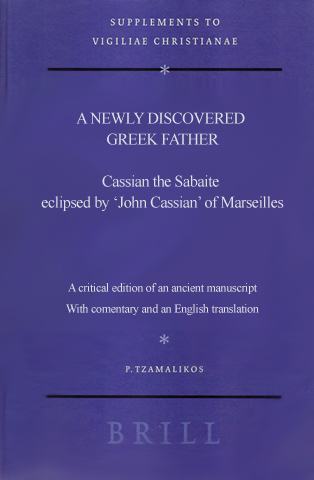
A NEWLY DISCOVERED GREEK FATHER
Cassian the Sabaite
eclipsed by ‘John Cassian’ of Marseilles
A critical edition of an ancient manuscript
with commentary and an English translation
from Codex 573, of the Meteora monastery of Metamorphosis (the Great Meteoron)
SUPPLEMENTS TO VIGILIAE CHRISTIANAE
vol. 111
BRILL, 2012
Visit the official website of this book
https://brill.com/display/title/21281
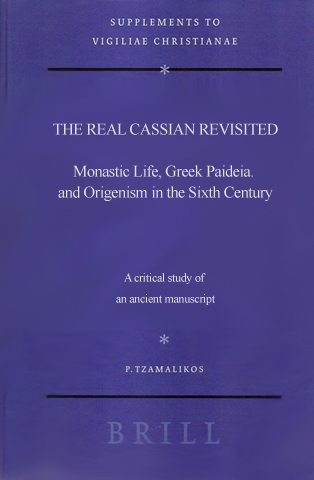
THE REAL CASSIAN REVISITED
Monastic Life, Greek Paideia,
and Origenism in the Sixth Century
A critical study of an ancient manuscript
SUPPLEMENTS TO VIGILIAE CHRISTIANAE
vol. 112
BRILL, 2012
Visit the official website of this book
https://brill.com/display/title/17337?language=en
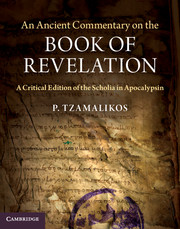
AN ANCIENT COMMENTARY ON THE BOOK OF REVELATION
A critical edition of the Scholia in Apocalypsin
with commentary and English translation
from Codex 573, of the Meteora monastery of Metamorphosis (the Great Meteoron)
Cambridge University Press, 2013
Visit the official website of this book
This book, written by the newly discovered Greek father Cassian the Sabaite (c. 470 - 20 July, 548 – an acclaimed scholar, the fourth abbot of the Laura of Sabas in Plalestine after St Sabas, and a spiritual child of St Sabas himself), alongside my two 2012-books, caused panic-stricken delirium to certain Catholic theologians, monks, priests, and the like, prompting frantic and preposterous reviews in a desperate attempt to rescue the mirage called ‘John Cassian of Marseilles’.
Cassian’s Greek texts always indicate as their author ‘Cassian’, never ‘John Cassian’, which is a name entirely unknown to any Greek theologian, or to any Greek source whatsoever.
Cyril of Scythopolis praised not only Abba Cassian the Sabaite's orthodoxy and pious conduct, but also his erudition (τὸν νῦν ἡγούμενον ἀββᾶν Κασιανὸν Σκυθοπολίτην ὄντα τῷ γένει ὀρθόδοξόν τε ὄντα καὶ βίῳ καὶ λόγῳ κεκοσμημένον), which squares with the report that Abba Cassian the Sabaite was a proficient theologian, who took part in the Council of 536, as a delegate of the Laura of Sabas.
Cassian was a native of Scythopolis (today’s Beit She'an or Beisan or Beth-shean, a city in the Northern District of Israel), who had never anything to do with Marseilles, the once-Greek colony in France.
The fancy ‘John Cassian’ was made a native of Scythia Minor (now Dobruja, a region today shared by Romania and Bulgaria).
The edited texts presented, edited and exhaustively perused in three books, reveal a profoundly erudite Greek author,employing highly refined and extremely rare Greek idiomatic expressions that had been used by a small handful of Greek philosophers of the highest order. And yet fanatic Catholic zealots desperately strove either to turn a blind eye on those illuminating analyses (assuming they were able to read them in the first place) and preposterously asserts that these manifestly Greek originals are but Greek translations from clumsy Latin propositions.
Thus, they frantically dismissed Cassian the Sabaite altogether, while dreading (or mourning) the prospect of 'eighty years of scholarship on John Cassian' turning to a demolished house of cards.
But I have left the ravings of fanatics to their own devises.
While despising conversation with bigotry, and abiding by unbiased non-partisan scholarship only, I wrote the Appendix II: “Cassian who? On Attempts to Rescue a Figment” (available below), in my Origen and Hellenism, pp. 475–496. This demonstrably kept at bay any sort of religious partisanship (to which I have always been utterly indifferent) or any sort of chauvinism (as a consternated critic nesciently alleged), with which I have never had anything to do, anyway.
For I am myself too Hellene to be a chauvinist – and let discomposed bigotry remain in its dire straits.
The problem perenially remains the same: frivolous persons of questionable acumen, posing as 'scholars', presume to make assertions on texts of Greek literature, both philosophical and patristic (especially ones loaded with highly nuanced philosophical connotations and stupendously telling idiomatic Greek expressions meaningfully pregnant with precious information and speaking to brilliant moments of the Greek philosophical tradition), while they themselves refuse to learn Greek.
ANAXAGORAS, ORIGEN, AND NEOPLATONISM
The Legacy of Anaxagoras to Classical and Late Antiquity
2 volumes
pp. xxviii + 1794
De Gruyter
Berlin / New York, 2016
 vol. I
(pp. xxviii + 1 ÷ 823)
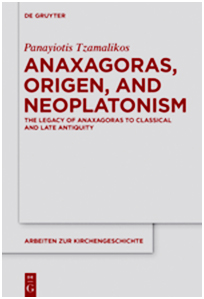 vol. II
pp. (xix + 825 ÷ 1778)
Origen caveated that his doctrine of the soul had nothing to to with that of Plato’s, and that his own ‘theory’ was ‘more sublime’ (ὑψηλοτέρα θεωρία – Contra Celsum, IV.19). However, both ancient and modern unschooled theologians, unable as they have always been to make out what this ‘more sublime theory’ was about, are locked up in the folly that Origen maintained ‘a pre-existent world of souls’ and a 'beginningless creation'.
Having already rebutted these allegations since 1983-1987, in my Doctoral Thesis (published in 1991), this book explains what this ‘more sublime theory’ was about, namely, that this was Origen’s Anaxagorean Theory of Logoi, which I expound at length and discuss in its proper context within the Greek philosophical ambiance.
Theologians, unable as they always are to follow Origen's enormous philosophical background, and consequently intransigent opposite elaborate arguments for that matter (which are way unable to assess, and, more often than not, even to read) obstreperously are stuck to the folly about ‘a pre-existent world of souls’, and the like.
By now, only a few philosophers, and far fewer theologians, have begun to grasp what Origen's Theory of Logoi actually is about.
Visit the official website of this book
https://www.degruyter.com/document/doi/10.1515/9783110420104/html
ORIGEN: NEW FRAGMENTS FROM THE COMMENTARY ON MATTHEW
Codices Sabaiticus 232 & Holy Cross 104, Jerusalem
pp. cxcv + 686
Ferdinand Schöningh (Paderborn, Germany / Boston, USA), 2020
Visit the official website of this book
https://brill.com/display/title/56573
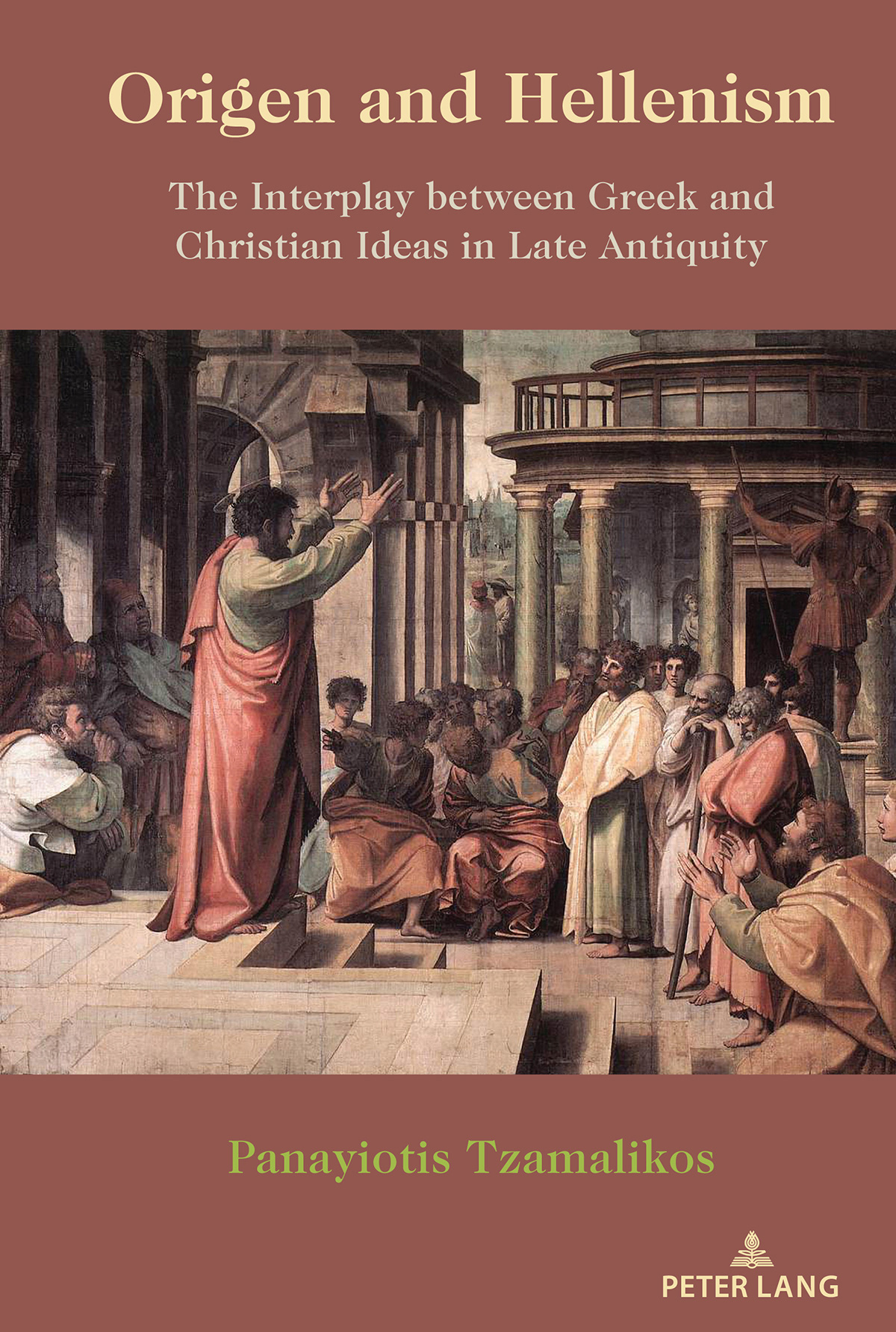
ORIGEN AND HELLENISM
The Interplay between Greek and Christian Ideas in Late Antiquity
pp. xxiv + 569
Peter Lang, New York,
Bern • Berlin • Brussels • Vienna • Oxford • Warsaw
2022
Visit the official website of this book
https://www.peterlang.com/document/1062337
APPENDIX II
TO
ORIGEN AND HELLENISM
pp. 475-496
“Cassian Who? On Attempts to Rescue a Figment” [labelled 'John Cassian of Marseilles']
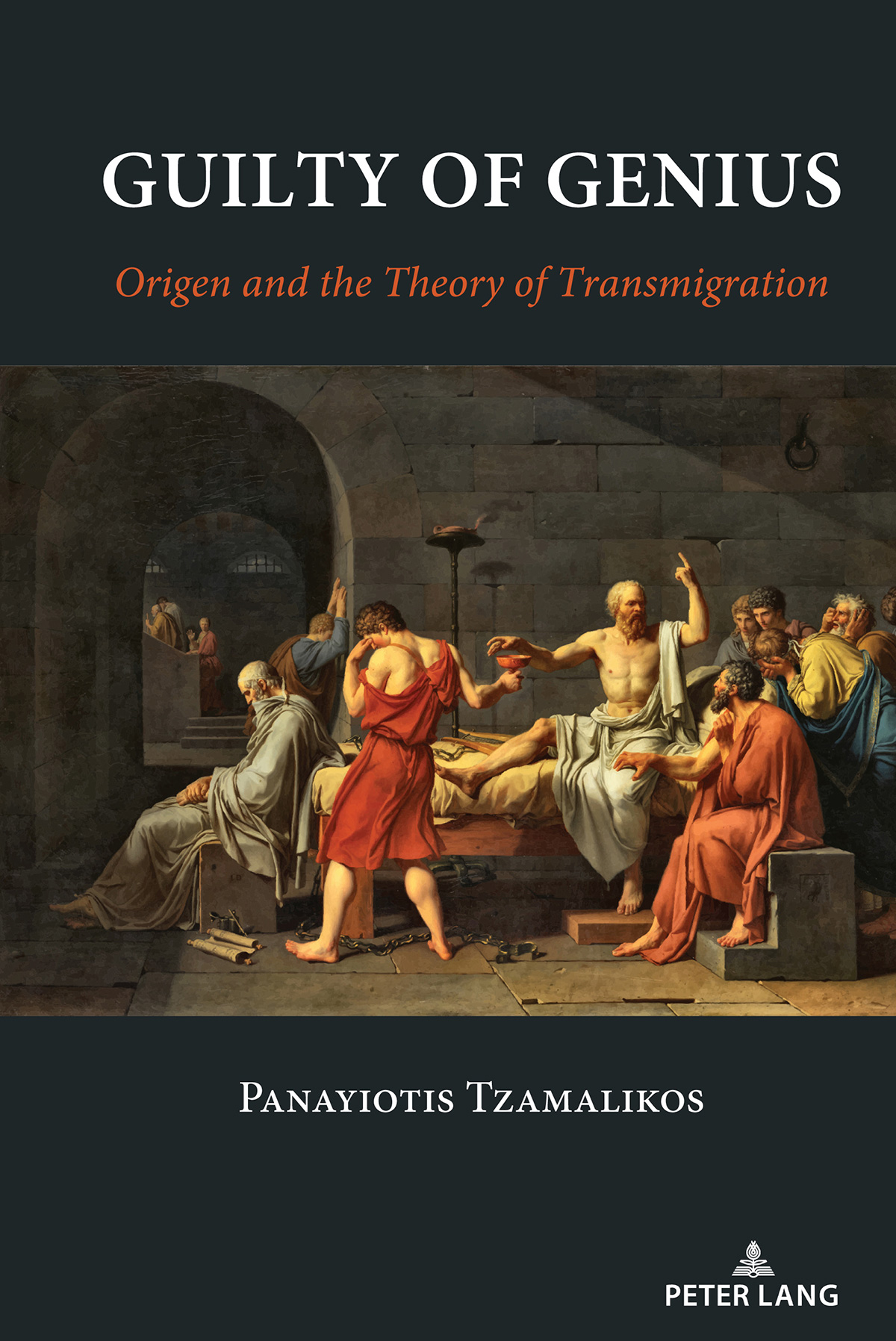
GUILTY OF GENIUS
Origen and the Theory of Transmigration
pp. xxvii + 454
Peter Lang, New York,
Bern • Berlin • Brussels • Vienna • Oxford • Warsaw
2022
Visit the official website of this book
https://www.peterlang.com/document/1140676
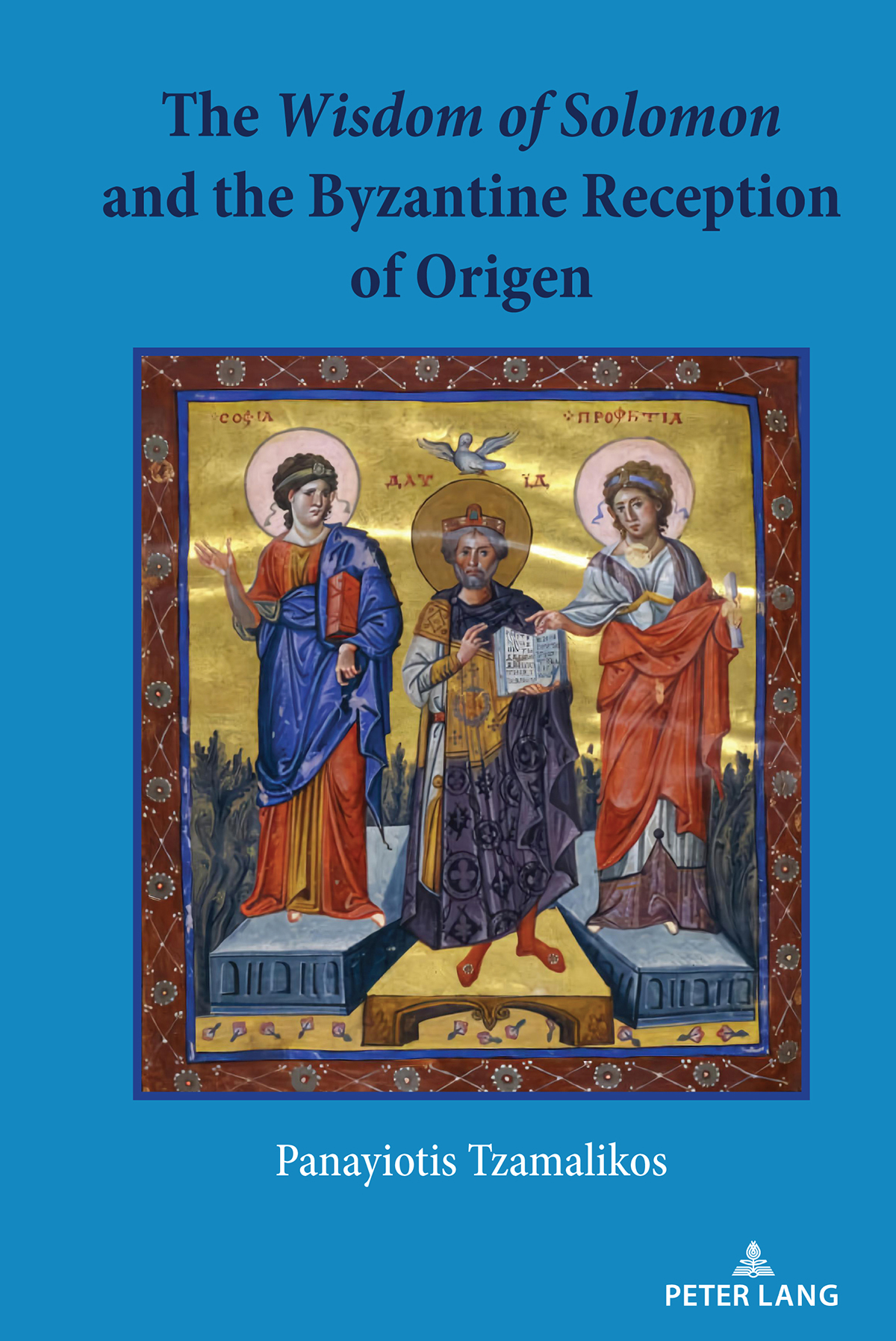
THE WISDOM OF SOLOMON AND THE BYZANTINE RECEPTION OF ORIGEN
pp. xvi+720
Peter Lang, New York,
https://www.peterlang.com/document/1267466
This volume offers a critical edition, with English translation and extensive annotation, of a previously unknown Greek manuscript.
The authorof the manuscript writes in header, “Ἑρμηνεία τῆς Σοφίας τοῦ Σολομῶντος, ὥς φασιν, παρὰ τοῦ ’Ὠριγένους ἑρμηνευθεῖσα (‘Exegesis of the Wisdom of Solomon, which, as they say, has been interpreted by Origen’).”
However, it turned out that this text is not actually Origen’s. It was written by the immensely erudite Byzantine Greek astronomer, historian, and theologian Nikephorus Gregoras (c. 1295 – 1360), who used Origen’s name for specific reasons explained in this edition. It is neverthelessarguably demonstrated that Nikephorus Gregoras availed himself of Origen's own Commentary on the Wisdom of Solomon.
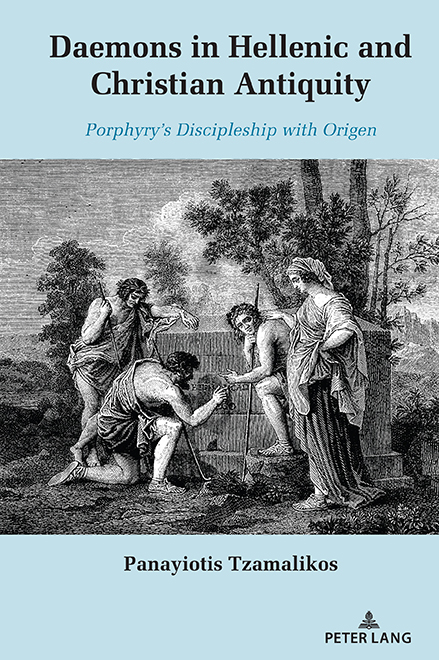
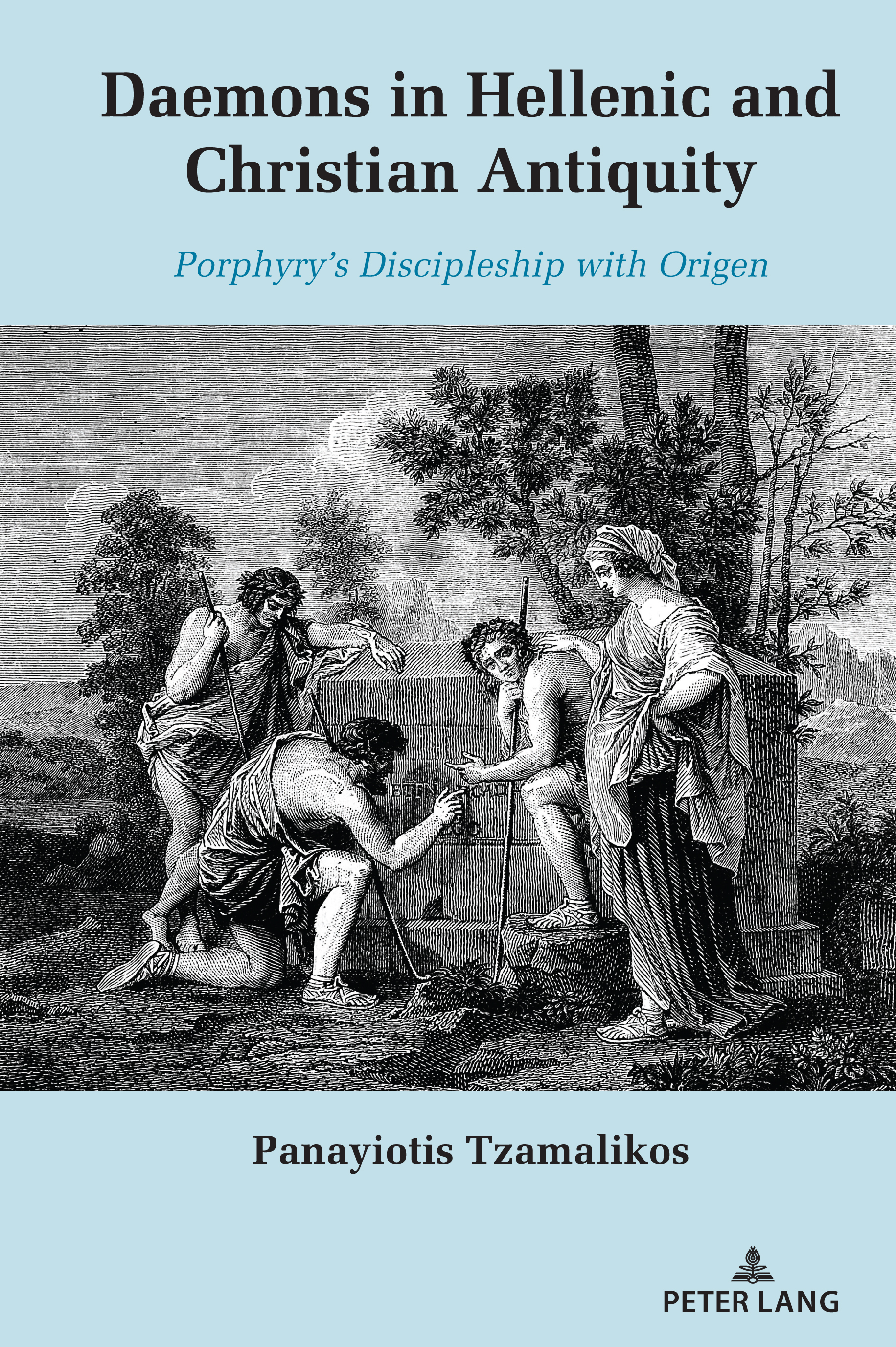
DAEMONS IN HELLENIC AND CHRISTIAN ANTIQUITY
Porphyry’s Discipleship with Origen
Peter Lang, 2025
New York - Berlin - Bruxelles - Chennai - Lausanne – Oxford
pp. xxii + 790
Visit the official website of this book
https://www.peterlang.com/document/1336022
Books and Articles in Greek appear in the Greek edition of this site
 Panayiotis Tzamalikos (MSc, MPhil, PhD) is Professor of Philosophy at the Aristotle University of Thessaloniki, Greece.
Born in Athens, he studied at the University of Thessaloniki, first Science and then Philosophy.
Doctor of Philosophy of the University of Glasgow, Scotland. Senior Research Fellow at Glasgow University (1986-2001). His main research interests include Greek Philosophy (Presocratics, Classical and Late Antiquity), the relation and interplay between Hellenism and Christianity, the roots and evolution of Christian doctrine from its origins until the eleventh century, Classical and Late Antique philosophy and its influence on Christianity, the influence of Christian thought on Neoplatonism, Patristic Theology, and the real import of Origenism and its various implications, from Origen’s death down to the late sixth century.
He has written extensively on Origen, the author in whose work the interplay between those streams of thought is most dramatic as well as illuminating of the backdrop and setting in which Neoplatonism and Patristic Thought emerged, interacted, and evolved side-by-side.
Following research on unpublished ancient Greek manuscripts, his three books on the newly discovered Christian author Cassian the Sabaite (heretofore eclipsed by a figment called 'John Cassian of Marseilles') explore the dramatic relation between Hellenism and Christianity under the reign of Justinian, as this appears is the writings of this hitherto unknown Greek Father. Cassian the Sabaite was an erudite scholar and student of the Hellenic lore as much as was he a Christian, who deplored the views about ‘heresy’ imposed on Christian theologian’s by the ‘imperial orthodoxy’ of Justinian’s caesaropapism.
His latest book on Anaxagoras (September 2016, see below) explores the physics and philosophy of this Presocratic rebutting the inveterate verdic that he introduced material principles, which unlearnedly have be taken to be 'stuffs'. Anaxagoras was the real source of the theory of potentiality, which Aristotle received without adding anything substantially new to this. Anaxagoras' notion of Nous identified with God was taken up by Plato, then by Aristotle and the Stoics, and by the most eminent of Christian theologians who used Nous as an alternative name either for the Trinity or for any of the Three Persons. Origen, followed by Porphyry, revived Anaxagoras' Theory of Logoi, on the basis of which can Origen's theory of soul be grasped, thus eliminating the fansciful nonsense about his alleged 'theory of transmigration' (chapter 13, pp. 1178-1442). It has been also shown that the critical exposition of Anaxagoras' text and philosophy by Simplicius (who alone preserved Anaxagoras' own words in considerable context) is not an aleged 'Neoplatonic' rendering of Anaxagoras; rather, critical study of Aristotle's invective against this Presocratic, along with Neoplatonic texts (not only of Plotinus, but also of Porphyry, Proclus, Ammonius, Damascius, Simplicius) reveals that Anaxagoras exerted critical influence upon critical Neoplatonic ideas and formulations, notwithstanding the substantial differences of Neoplatonism from that insightful Presocratic genius.
Panayiotis Tzamalikos' books in English have been published by the following publishers (see books in Greek in the Greek version of this site):
Peter Lang Verlag, Bern, Frankfurt, Paris, New York
- The Concept of Time in Origen, 1991
Brill Academic Publishers, Leiden, The Netherlands / Boston, USA
- Origen: Cosmology and Ontology of Time, 2006
- Origen: Philosophy of History and Eschatology, 2007
- A Newly Discovered Greek Father
Cassian the Sabaite eclipsed by ‘John Cassian’ of Marseilles
A critical edition of an ancient manuscript with commentary and an English translation, 2012
- The Real Cassian Revisited
Monastic Life, Greek Paideia, and Origenism in the Sixth Century
A critical study of an ancient manuscript, 2012
Cambridge University Press, Cambridge, England / New York, USA
- An Ancient Commentary on The Book of Revelation
A critical edition of the Scholia in Apocalypsin
with commentary and an English translation, 2013
De Gruyter, Berlin, Germany / New York, USA
- Anaxagoras, Origen, and Neoplatonism
The Legacy of Anaxagoras to Classical and Late Antiquity, 2016
2 volumes, pp. xxviii + 1794
About Panayiotis Tzamalikos
 Panayiotis Tzamalikos (MSc, MPhil. PhD) is Professor of Philosophy at the Aristotle University of Thessaloniki, Greece. Born in Athens, he studied at the University of Thessaloniki, first Science and then Philosophy. READ MORE >>
Research
Damascius on the Plotinian Triad
31 December 2016
Martin Heidegger and Greek thought
31 December 2016
Was the Stoic God corporeal?
31 December 2016
Click here to read more